
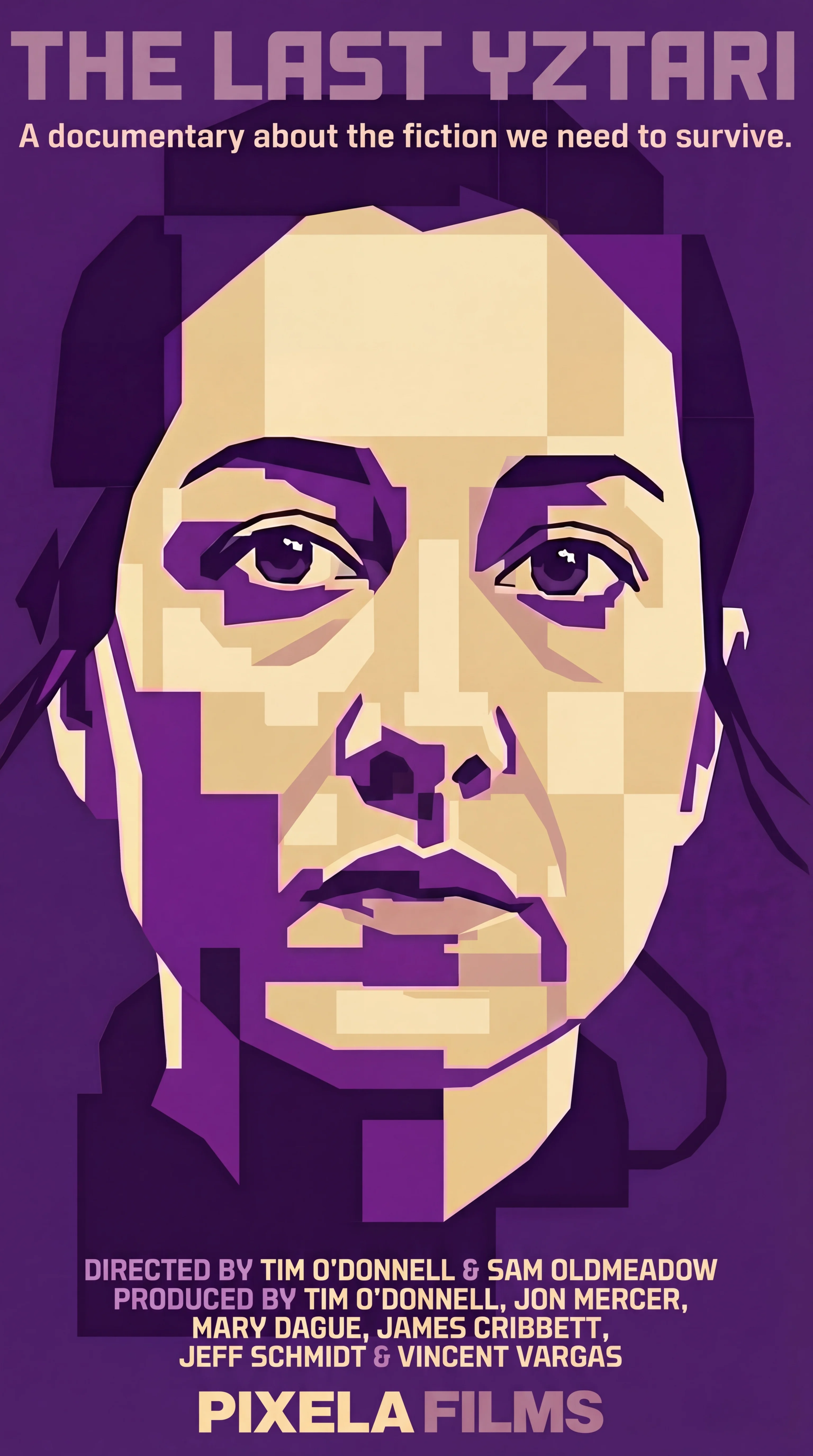
A documentary about the fiction we need to survive.
Help support the film with a tax deductible donation

Mary Dague lost both arms defusing bombs in Iraq. She tried for years to write her story and couldn't. Eighteen years later, she's building a world where that trauma belongs to someone else—narrated by DANI, the artificial consciousness she created to watch over her fictional selves. The film reveals her rebuilding identity through imagination, and asks what happens when the only way to tell the truth is through fiction.
Directed by Tim O'Donnell & Sam Oldmeadow
Produced by Tim O'Donnell, Jon Mercer, Mary Dague, James Cribbett, Jeff Schmidt & Vincent Vargas
Sound Editor / Re-Recording Mixer Zach McNees
Mary Dague in the News
Vice
The Disabled Iraq Veteran Starring in a Military Zombie Film
NPR StoryCorps
Bomb Techs Work Through 'Dark Spots' to Brighter Lives
Team Never Quit
Marcus Luttrell Podcast Interview
American Legion
An EOD Tech's Journey of Overcoming Amputations, Cancer and Loss
Gary Sinise Foundation
R.I.S.E. Program Profile
IMDb
Range 15 - Veteran-Made Film
Hazard Ground
Episode 127 - Comprehensive Interview
Gallery
Producer/Subject Statement
from Mary Dague
After 9/11, and graduating high school, I ran off and joined the Army as an Explosive Ordnance Disposal Technician (bomb squad). In 2007, I lost both of my arms to an IED in Iraq. I went through a bit of an arduous recovery process; surgeries, divorce, cancer, losing friends and brothers, and ended up being somewhat motivational in veteran circles.
I had been asked to write a book about my life and experiences, and I even tried to do just that. I hated it. Every second of it. I even got a DVR and a buddy to ghostwrite it with me, and I can tell you, without a doubt, I despise writing about my life.
However, during that time, I unintentionally started writing a fictional series, set in a different world. It was just little bits at first; little scenarios with fictional characters that I used to work out my emotions when writing the autobiography. It eventually became this grand adventure, with characters that I could use to describe the emotions, struggles, successes and failures of myself and the people closest to me. At first none of it fit together, but I realized that it was helping me in ways that working out, drinking, therapy, or playing video games wasn't. That story evolved from little snippets to what will be at least a trilogy.
As I was writing both works, I met Tim O'Donnell. He was documenting Not A War Story and I happened to be part of the project. After about a year of prodding, he convinced me to do a long-form documentary on my life. It's something I never would have done, as I actually kind of hate being the center of attention. But, Tim, Jon, and Sam have all been wonderful about it, and have a way of making me more comfortable than uncomfortable in front of a camera. If it wasn't their crew, this film would not exist today.
They've also seen more of the series than anyone else, and it was their idea to incorporate it into the film to demonstrate how I (and others) use writing (fictional or otherwise) as a safer cathartic outlet, to process and handle trauma or tragedy in a healthy way. It's not a story where there are only happy endings and everyone lives. Because that's not how my life has gone. But being able to divide my struggles and challenges into different characters has made them seem easier to contend with.
It's incredibly nerve wracking to have not only my life, but how I cope with it presented to people in such a real way. Like I'm standing naked in front of a whole theater, and my thoughts are being projected behind me for everyone to see. But, my hope, is that this reaches other people who need a way to deal with their struggles too. Maybe it's not through writing, but music, or film, or something that they can create to help work through their own story, instead of ending it too early.